Showing posts with label Technology. Show all posts
Thursday, August 20, 2026

India's AI Labelling Rules Six Months On: Courts Still Needed

A video of a Union Minister pocketing money lands in your family WhatsApp group. It looks right. The voice is his, the office is his, the lighting is ordinary enough to pass. Nothing on the screen tells you a machine built it, and by the time anyone official says so, your uncle has forwarded it twice.
India's AI Labelling Rules Six Months On: Courts Still Needed
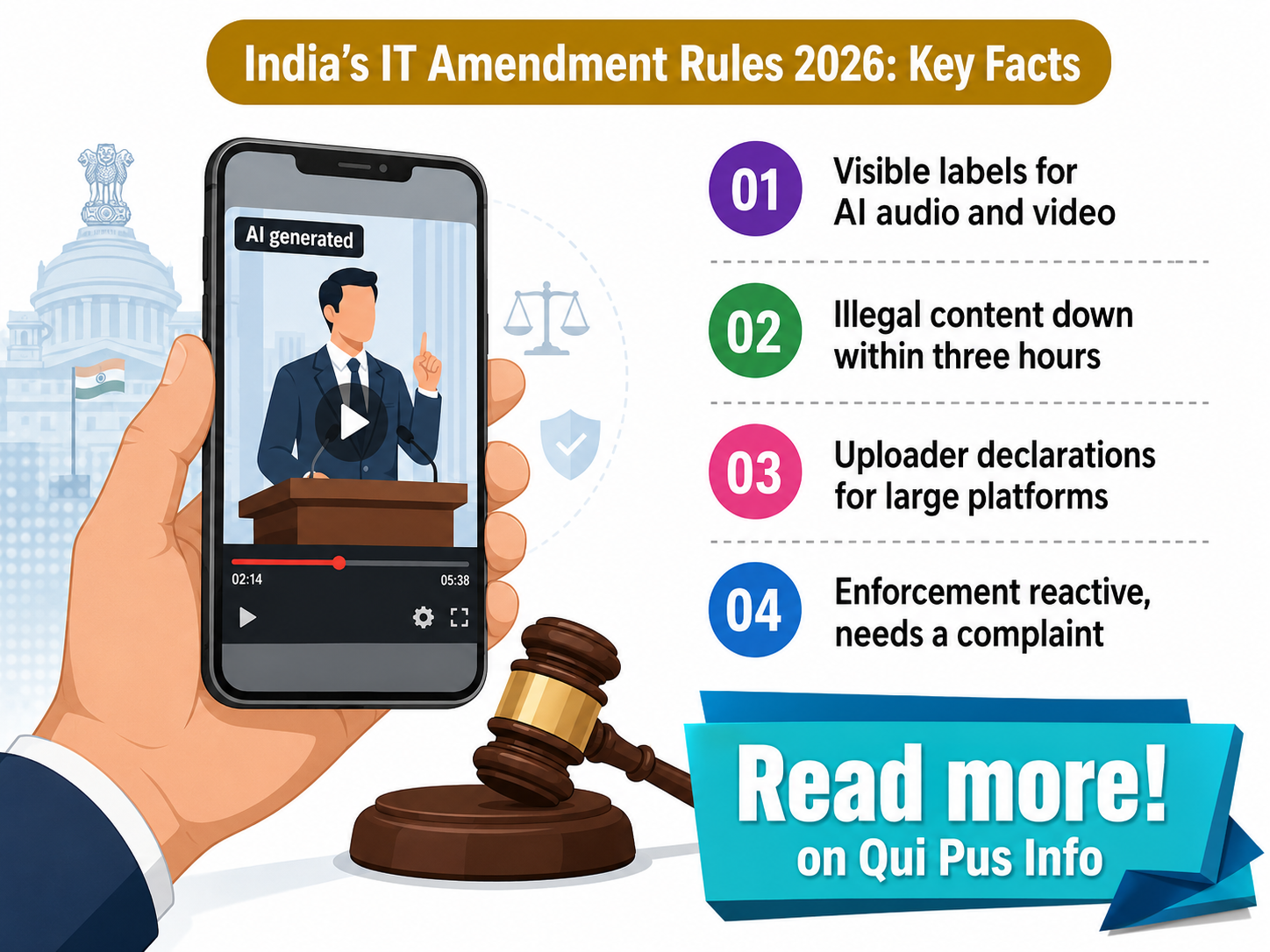
TL;DR: India's IT Amendment Rules 2026 have required visible labels on AI-generated media and fast takedowns since 20 February. Six months on, a Union Minister still needed a Bombay High Court order to get deepfakes of himself pulled down. The label arrived. The enforcement did not.

Why It Matters

The rules were notified on 10 February 2026 and came into force ten days later. They do two things worth caring about. Synthetically generated information, meaning audio or video created or altered by a machine so it reads as authentic, now has to carry a label an ordinary person can actually see. And platforms have to embed permanent provenance markers into that content wherever it is technically feasible, then stop anyone from stripping them out. It is the same regulatory instinct that produced 83 security standards aimed at the handset in your pocket: fix it at the device or the platform, because chasing individual bad actors across the open internet has never scaled.

The draft wanted something blunter. A watermark covering ten percent of the frame, fixed, non-negotiable. That died before notification and was replaced by a principle: the label must be clear and prominent. Good. A hard percentage would have been unreadable on a phone and ridiculous on a television, and every design team in the country would have spent a year gaming the geometry instead of improving the disclosure. But turn it around and the change reads as an admission. Nobody could describe what a good label looks like, so the rule now describes a feeling and leaves the rest to whoever ships the app.

Then there is the clock, and the clock is where the framework quietly hands the work back to you. Platforms now face a hard deadline to pull flagged unlawful synthetic content once a lawful notice reaches them, cut sharply from the old window. Cross the significant intermediary threshold and a second duty lands: ask uploaders whether their material is machine-made, then verify that answer with technical measures instead of taking it on trust. On paper, aggressive. In practice, none of it moves until somebody notices, reports, and is believed. McAfee's State of the Scamiverse survey, published in February 2026, found Indians now spend 102 hours a year working out whether the messages hitting their phones are genuine. That is the real bill, and a shortened takedown window does nothing to it.

Takedown deadline

3 hours

Down from thirty six

Average scam loss

₹93,915

Per affected Indian respondent

Strict-tier threshold

50 lakh users

Registered accounts inside India

Cannot spot a fake

1 in 3

Indians surveyed, November 2025

The tier threshold is the number to watch, because it is a cliff rather than a slope. Cross it and you inherit the declaration-and-verification duty, which in engineering terms means building a classifier that guesses whether an upload is synthetic and then owning every case it gets wrong. Stay under it and you inherit almost nothing. Every mid-sized Indian app now has a live commercial reason to keep its registered account count comfortably short of the line, and no regulator has said a word about what happens when they do. TRAI has spent years watching this exact arithmetic play out in telecom without moving on it.

"

A three hour takedown clock means nothing to the person it was written for, because the clock only starts once she has already found the video, reported it, and been believed.

August gave the framework its first properly public test, and it is worth setting the written rule beside what actually happened in a courtroom.

Category Detail Insight
Legal basis An amendment to the existing intermediary guidelines, not a standalone AI statute Existing framework extended, not rewritten
Scope Audio, visual and audio-visual material altered to appear authentic Text-only output sits outside the rule
Label test Clear and prominent, with the draft's fixed frame percentage dropped Flexibility bought at the cost of certainty
Provenance Permanent markers embedded where feasible, with removal blocked by design Traceability outlasts any visible badge
Exemptions Routine editing, good-faith technical correction, accessibility work Ordinary photo cleanup stays untouched
Verification Uploader declares, platform checks the declaration with technical measures Platforms now own the classification mistakes
Trigger A lawful order or notice from a court or an authorised government agency Nothing moves without an external complaint
August test Bombay High Court, 5 August 2026, before Justice Arif Doctor Meta and Google agreed after court intervention

Read down that Trigger row again. The entire machine is reactive. Provenance markers, declaration duties, a stopwatch on removals, and every one of them waits for a complaint to arrive from outside. Which is why the story of the last six months is not the rule failing. It is the rule working exactly as drafted, on a schedule set by whoever has the time and standing to complain.

More wary than a year ago · 82% Social account compromised · 70% Lost money to a scam · 51% Hit by a voice-clone scam · 20% 0% 100%

The same McAfee fieldwork, run across seven countries, puts the Indian exposure picture in one frame: most people have already been hit, and most of them know it.

Friction Points

Earlier this month the Bombay High Court heard Nitin Gadkari's application against Meta Platforms over face-swapped videos and fabricated quotes tying him to the E20 ethanol controversy. Justice Arif Doctor called the material absolutely vile and abusive and said it should have no place on a public platform accessible to everyone, including the young. Meta and Google agreed in court to remove the listed content and were directed to hand over basic subscriber information for the accounts behind it. The next hearing sits roughly four weeks out. Note what that sequence required: a sitting Union Minister, senior counsel, and a High Court listing, half a year after the deadline took effect. If that is the cost of entry, the rule is not built for the woman whose face was pasted into something at two in the morning.

Here is the part nobody in the drafting room seems to have answered, and I would put it as opinion rather than fact: a labelling regime binds the people who were already going to behave. The model that stamps provenance into its output and the platform that surfaces the badge are both following rules that a deliberate faker simply routes around, using an offshore tool, a screen recording, a re-encode. So the label ends up certifying the harmless half of the internet while the harmful half stays unmarked, and no one has told readers what they are supposed to conclude from a video that carries no label at all. Absence of a badge is not evidence of authenticity. It might just mean the rule was ignored.

And there is a cost on the other side that gets less attention than it deserves. Compressing removal into hours, with safe harbour hanging on compliance, pushes platforms toward automated over-removal, because deleting a borderline clip is cheaper than defending it. Satire, political commentary, parody accounts (and yes, that includes the stuff you actually wanted to see) all sit in the blast radius. The Internet Freedom Foundation has argued the shortened windows leave no room for meaningful human review, and on that narrow point the criticism looks right to me even if the underlying goal does not.

  • An unlabelled video proves nothing either way. Treat missing provenance as unknown, not clean.
  • The clock starts at the notice, not at the upload. Reporting fast matters more than knowing the law.
  • Text is out of scope, so machine-written fake quotes and fake screenshots carry no labelling duty at all.
  • Smaller apps sit below the strict tier and owe you far less, which is where a lot of this content will migrate.
  • Provenance markers survive the label. If a clip matters, the metadata is the thing worth preserving before you forward it.
Check · Report · Hold Look for provenance data, not a corner watermark. Screenshots strip it out. Use the in-app report flow, not a comment. Only a notice starts it. Do not forward while you are still checking. Reach beats correction.

Three habits, none of which require you to read a gazette notification.

The rules are a real improvement over having nothing, and they are nowhere near what the marketing around them implied. India moved faster than most countries here, which counts for something, in the same way moving first on credit through UPI counted for something before the fine print landed. If you want a version of this that protects your household rather than a minister, the move is not legal. Go into the settings on every account your family uses, turn on whatever synthetic-media reporting the platform already offers, and use it the first time rather than the fifth, the same discipline that makes switching off Shorts on the living room television actually stick. The label is not going to save you. The report button might.

Saturday, August 1, 2026

India Wants 83 Security Rules Baked Into Your Next Phone

Your phone finished installing a security patch last night while you slept. Under a draft rule India is still arguing over, that patch would have stopped at a government body for review before it ever reached you, and the code behind it would sit in a testing lab somewhere in India. Same phone, same update, one extra reader.

India Wants 83 Security Rules Baked Into Your Next Phone
TL;DR: India's draft ITSAR package bundles 83 security standards into one rulebook for every handset sold here. Source-code review, pre-release patch vetting, and a year of system logs stored on your device. Nothing is notified yet, and the real fight is over who gets to look.

Why It Matters

Start with what already happened, because it sets the pattern. India's Ministry of Communications gave handset makers 90 days to preinstall its Sanchar Saathi app in a December 2025 order, told them to make sure users could not disable it, and withdrew the whole thing two days later after the backlash. The app survived. The mandate did not. That sequence, order first and consultation afterwards, is the thing worth watching, not any single rule inside it.

The ITSAR package is a bigger version of the same instinct. Reuters reported in January 2026 that the draft would require device makers to open source code for review at designated labs in India, submit updates and security patches to a government body before public release, run periodic on-device malware scans, and keep system logs on the handset. India's IT ministry publicly refuted the source-code characterisation the next day. Both things are on the record, and neither has been resolved since.

And here is where I part company with most of the coverage. The patch-vetting clause worries me more than the source-code clause does. Source code review is a one-time exposure that vendors can negotiate, sandbox, and lawyer around. A standing approval queue between a security fix and your handset is different: it inserts a delay into the exact process that exists to remove delay. Every hour a patch waits in a review inbox is an hour the bug it fixes is still live on 750 million devices. That is not a privacy argument. It is an arithmetic one. The same tension showed up when credit lines quietly attached themselves to ordinary UPI payments, and again when EV charging fragmented into a hundred incompatible apps: the rulebook arrives after the behaviour, and consumers absorb the gap.

Draft Standards

83

Rules in one package

Log Retention

12 months

Kept on your handset

Average Phone Price

$282

Record India price, 2025

Yearly Price Rise

8%

Counterpoint's 2025 increase

Those price figures come from Counterpoint Research's 2025 India numbers, and they belong in this conversation for a plain reason. Compliance is never free. Testing, lab submissions, and a separate India build all land somewhere in the bill of materials, and in a market where the average handset already costs more than it did a year ago, the cheapest phones are where that cost shows up first. The people most likely to buy a device with a locked-down India-specific security build are also the people least able to pay another few hundred rupees for it.

"

A year of system logs sitting on your handset is not a security feature. It is an evidence locker, and you are holding the key on someone else's behalf.

What The Draft Actually Contains

Strip away the legal briefings and the exam-prep summaries, and the package resolves into a handful of concrete changes to the device in your pocket. Some of them are things privacy advocates have wanted for a decade. Others are the opposite.

Category Detail Why It Matters
Framework ITSAR, drafted in 2023, now weighed as binding Old text, brand new legal force
Source Code Reviewed and tested at designated Indian labs Vendors call it precedent-free globally
Update Path Patches submitted for review before public release A queue sits between fix and phone
Bloatware Every pre-installed app becomes removable The one clean consumer win here
Permissions Limits on what apps may run in background Fewer apps listening while idle
Scanning Periodic malware scans running on the handset Battery and performance cost falls on you
Status Consultations open, no rules notified so far Still a draft, not yet law

Read down that table and the split is obvious. Two rows help you. Four rows help someone else and bill you for the privilege. The removable-bloatware clause alone would do more for the average budget handset in India than anything a manufacturer has shipped voluntarily in five years, which is exactly why it should not be traded away as a sweetener for the rest.

1 Dec 2025 · 3 Dec 2025 · 11 Jan 2026 · Aug 2026 Preinstall order · Order withdrawn · ITSAR draft reported · Still unnotified

The timeline above tracks four moves in eight months: a preinstall order on 1 December 2025, its withdrawal on 3 December 2025, the ITSAR draft surfacing on 11 January 2026, and no notified rule as of August 2026.

The Friction Points Nobody Has Solved

Nobody has answered the question that actually matters: who audits the auditor. A state that can read source code and clear patches before release gains real defensive capability and real surveillance capability from the identical access, and the draft says nothing about which one it is buying. That is not a conspiracy claim. It is a design gap, and it is the kind of gap that gets filled quietly by whoever holds the keys, in whichever direction is convenient at the time. My position is that access this broad needs an independent oversight body named in the rule itself, before the rule exists, not bolted on after the first misuse.

There is a fair counter-argument and it deserves stating properly. India absorbs enormous volumes of device-level fraud, and regulators have limited leverage over handset makers headquartered elsewhere. Sitting on your hands is also a choice with a body count. The complaint here is not that India is regulating phones. It is that the sequencing keeps running backwards, the same way telecom oversight arrived years after market concentration had already set.

  • Patch latency compounds: a review queue that adds even days to an emergency fix hands attackers a window that scales with every device in the country.
  • Storage and battery are finite: continuous scanning plus a year of retained logs consumes exactly the resources that budget handsets have least of.
  • Log access is undefined: the draft says logs must exist, not who may request them, under what process, or how long a request stays secret.
  • Fragmentation risk: an India-specific build that diverges from the global one tends to receive updates last, which is the reverse of the stated goal.
  • Enforcement is untested: the same withdrawal that killed the preinstall order shows how fast a mandate can move, in both directions, without warning.

Key Takeaways

India shipped 152 million smartphones in 2025 on IDC's count, roughly flat year on year, so any device rule here lands on a market that is large but no longer growing.

Nothing in the package is enforceable today. Consultations are open and no standard has been notified, which means public comment still counts for something.

The removable pre-installed apps clause is worth defending on its own merits, separately from the surveillance-adjacent clauses it currently travels with.

Read the consultation notices when they appear and say something specific about the clause you object to, because a draft with no notified rule is the only stage at which any of this is still negotiable. Once 83 standards ship as one package, nobody gets to keep the two good ones and drop the rest.

Saturday, July 11, 2026

Credit On UPI Is Quietly Rewiring How India Spends Money

The vegetable seller's QR code looks identical to the one you scanned last week. You point your phone, approve ₹40 for a kilo of onions, and walk off before the change would have hit your palm. What you may not have registered is that the money never left your bank balance. It came from a pre-sanctioned line stitched invisibly behind your UPI ID, and the repayment clock started the second the code flashed green.

That quiet swap — savings out, borrowing in, at the level of onions and auto fares — is the biggest shift in Indian payments since the QR code itself arrived. And almost nobody agreed to it on purpose.

TL;DR: Credit on UPI now lets a pre-sanctioned line fund a ₹40 QR tap, so borrowing has quietly slipped into daily subsistence spending. New merchant fees and lender rules are arriving after the habit spread, which leaves ordinary households, not regulators, to feel the real cost of it first.

Why It Matters

India runs the largest real-time payment network on the planet, and it is now a core piece of the country's digital public plumbing. In February 2026 alone the system cleared 16.6 billion UPI transactions, a number the National Payments Corporation of India (NPCI) publishes every month. When a rail carrying that much volume starts moving revolving debt instead of stored cash, the behavioral stakes stop being a banking footnote and become a household problem.

Because credit on UPI settles instantly and invisibly, it strips out the small hesitation that used to guard everyday spending. Economists call that hesitation the pain of paying, and it is the reason a card buried in a wallet restrains an impulse more than a two-second tap ever will. A typical urban household that starts routing rent-adjacent essentials through a linked line can push ₹18,000 a month of ordinary spending onto borrowed money without once feeling like it took out a loan. The bill lands later, bundled, and detached from any single purchase that caused it.

Global Payment Share
49%
Of the world's real-time payments
Approval Speed
8 sec
To approve a tap-to-borrow buy
Rolling Cost
₹640
Monthly interest on a carried balance
Usage Jump
3.4x
Rise in small daily credit taps

The steepest rise in daily-use taps is not spread evenly. It concentrates among younger earners who treat the linked line as a bridge between paydays, and that is precisely the group least able to absorb a balance quietly compounding while they aren't watching it. What starts as a convenience for a bad week hardens into a baseline for every week.

  • Impulse control weakens: a tap carries none of the friction of opening a wallet, reading a card number, or counting out notes.
  • Debt hides inside essentials: borrowing for milk and auto rides looks nothing like a loan, so it escapes the mental budgeting people reserve for an EMI.
  • Repayment is deferred and bundled: dozens of tiny buys arrive as one statement, snapping the link between a specific purchase and its true price.
Credit On UPI Is Quietly Rewiring How India Spends Money

What The New Rules Actually Change

Regulators noticed the shift and began bolting fee scaffolding around it. The table maps what is changing, who it touches, and why each line matters for an ordinary payer rather than a bank's balance sheet.

Category Detail Why It Matters
New Fee Trigger 1.1%–2% MDR on RuPay credit above ₹2,000, from 1 June 2026 Small taps stay free, big ones cost
Free By Default Bank-funded UPI carries zero merchant charge (as of 2020) Free rails built the habit first
Where Credit Flows Milk, vegetables, auto rides under ₹100 Borrowing leaks into daily subsistence
Merchant Split Street vendors exempt, larger firms charged Protects the smallest sellers
Lender Exposure Pre-sanctioned lines, high-frequency low-ticket Distress signals get harder to spot
Access Driver Any QR can now draw a linked credit line Frictionless reach accelerates spending

Read together, the rows show a system being wired for revenue and lender comfort first, with consumer guardrails arriving as an afterthought instead of a founding principle. The fee logic is precise; the protection logic is still a sketch.

1
Link
A pre-sanctioned bank line attaches to your UPI ID.
2
Tap
Any QR, from a chai stall up, can draw on it.
3
Roll
Unpaid balances revolve, and interest starts stacking.

The flow above shows how a bank credit line quietly becomes the default funding source sitting behind an ordinary QR payment.

The Friction Points Nobody Has Solved

The politics are messier than the technology. A Parliamentary Standing Committee on Finance pushed in March 2026 to bring merchant charges back for large sellers, arguing the free model is financially unsustainable at national scale. As of July 2026 that push is still a proposal, not law, and the fight around it exposes a disagreement with no clean answer.

Nobody agrees who should shoulder the cost of running these rails. Charge merchants, and small sellers may quietly start refusing credit taps. Charge users, and adoption stalls. Let banks absorb it, and the incentive to lend loosely only grows. This is a real grey area where consumer protection, merchant survival, and platform economics pull in three different directions at the same time, and pretending one side is obviously right would be dishonest.

  • Lender accountability lags: when a single line funds hundreds of tiny buys, spotting early distress in a borrower's pattern is far harder than flagging one missed EMI.
  • Dispute resolution blurs: a failed tap that still books a charge now drags in the bank, the app, and the lender, and the payer waits while they argue over who dropped the handshake.
  • Inclusion cuts both ways: the same easy access that smooths a gig worker's bad week can trap a first-time borrower in a rolling balance they never planned to carry.

Scan Now, Reckon Later

Treat the linked line as exactly what it is — a loan that just bought your onions — and open the statement before it compounds into a number you never chose. The rails moved faster than the rulebook, and for now the person best placed to apply the missing brake is the one holding the phone.

Sunday, September 21, 2025

TRAI: A Silent Spectator to Telecom Monopoly in India?

India’s telecom industry has undergone massive transformations over the years, with major players like Jio, Airtel, and Vi dominating the market. While competition once drove affordability, the industry now seems to be shifting towards monopolistic practices, burdening consumers with unjustified price hikes. The Telecom Regulatory Authority of India (TRAI), which should act as a watchdog, appears to be turning a blind eye to the telecom giants' arrogance.

The lack of policy regulations to curb exploitative pricing tactics raises serious concerns about consumer rights and digital accessibility in India. Instead of protecting consumers, TRAI’s inaction is making way for these telecom giants to refine existing plans under the guise of affordability while, in reality, stripping consumers of budget-friendly options.

Let’s delve into the pressing issues surrounding TRAI’s regulatory stance and the growing telecom monopoly.

  1. Telecom Companies' Exploitative Pricing Strategies

Telecom providers in India are continuously revising their pricing models, often at the expense of consumers. The lack of strict regulatory intervention has enabled these companies to increase tariffs arbitrarily.

  • Refining Existing Plans as ‘Affordable’ Options Telecom companies have mastered the art of tweaking already existing plans, branding them as ‘affordable’ while actually increasing costs in the long run. A plan that once offered a certain amount of data and talk time now comes with reduced benefits under the pretext of improved services.
  • Disguised Tariff Hikes By eliminating entry-level plans, telecom providers are forcing consumers into pricier options. For example, eliminating the Rs. 99 plan and introducing a new ‘basic plan’ priced at Rs. 155 effectively pushes consumers to pay more for the same services.
  • Bundling of Unnecessary Services Another tactic is bundling unnecessary value-added services with core plans, making essential mobile services more expensive. Consumers who simply need basic calling and data services are forced to pay extra for OTT subscriptions or digital content they don’t require.
  • Absence of Regulatory Price Caps Unlike other essential services, there are no stringent price caps on telecom tariffs. The lack of intervention from TRAI has emboldened telecom companies to introduce arbitrary hikes, leaving consumers with no viable alternatives.
TRAI must act on monopoly telecom pricing
  1. TRAI’s Role: Regulator or Passive Observer?

TRAI was established to regulate the telecom industry, ensuring fair competition and consumer protection. However, recent trends suggest it is acting more as a spectator rather than a proactive regulatory body.

  • Failure to Enforce Consumer-Friendly Policies Despite the significant outcry over tariff hikes, TRAI has not introduced robust policies to regulate pricing strategies. This inaction raises concerns over its ability to function independently and hold telecom giants accountable.
  • Ignoring Public Complaints Consumer complaints regarding unfair billing, network issues, and hidden charges are met with little to no response from TRAI. Without a strict grievance redressal mechanism, consumers are left to accept whatever pricing changes telecom providers impose.
  • Lack of Competition Due to Consolidation The Indian telecom industry has witnessed massive consolidation, reducing the number of key players. With Vodafone Idea (Vi) struggling financially, Jio and Airtel are effectively forming a duopoly, allowing them to dictate prices without fear of competition.
  • No Transparency in Pricing Models TRAI has failed to ensure transparency in pricing structures. Tariff plans are modified without clear justifications, and consumers are often left confused about the terms and conditions of their services.
  1. Need for Stronger Policy Reforms

To prevent telecom companies from exploiting Indian mobile users, there is an urgent need for stricter regulatory measures. Here’s what TRAI should be focusing on:

  • Mandatory Basic Tier Plans A government-mandated basic plan should be introduced to ensure affordability for all users, particularly those from lower-income groups. This will prevent telecom providers from eliminating low-cost options.
  • Tariff Hike Approvals & Justifications Telecom companies should be required to justify any proposed tariff hikes with clear cost-benefit analyses. A regulatory body should approve these hikes to prevent arbitrary increases.
  • Better Consumer Grievance Redressal Mechanisms TRAI should establish a robust system for handling consumer complaints efficiently. A transparent resolution framework would ensure consumer interests are protected against unfair charges and services.
  • Promoting Healthy Market Competition The government and TRAI should encourage new entrants into the telecom sector to prevent monopolistic practices. Policies that enable fair competition will ultimately benefit consumers with better pricing and services.

Conclusion

TRAI’s passive stance on telecom pricing has raised serious concerns about its role in regulating the industry. As telecom giants continue to hike tariffs and eliminate affordable options, Indian consumers are left with no choice but to comply. Without strong policy interventions, the telecom industry’s monopolistic grip will only tighten, leading to higher costs and reduced accessibility.

It’s time for TRAI to stop being a mere spectator and take decisive action. The government must implement stricter regulations to ensure fair pricing, transparency, and competition. If left unchecked, telecom companies will continue to exploit millions of Indian mobile users, making basic connectivity a luxury rather than a necessity.

Saturday, December 14, 2024

Apple Should Compete with Adobe Illustrator for Graphic design

When it comes to graphic design, Adobe Illustrator reigns supreme. For decades, it’s been the go-to software for creating stunning illustrations, logos, and posters. But as the creative landscape evolves, many professionals and hobbyists wonder: where’s Apple in this space?

With its design-first ethos and recent acquisition of Pixelmator, Apple is perfectly poised to challenge Adobe. Imagine an Apple-designed tool that matches or even surpasses Illustrator in innovation, simplicity, and performance. Not only would it empower designers, but it could also shake up the creative software market in ways we’ve never seen before.

Let’s explore why this move could be a game-changer.

The Gap in Apple’s Creative Suite

Apple is known for crafting products that inspire creativity, from iPads to Final Cut Pro. Yet, it’s notably absent from the graphic design software arena—a space dominated by Adobe.

  • Missed Market Opportunities: The design community is vast and growing, encompassing everyone from freelance illustrators to branding agencies. Apple is missing out on a lucrative segment by not offering a robust graphic design tool.
  • Demand for Integrated Ecosystems: Designers often juggle multiple devices—MacBooks, iPads, and iPhones. An Apple-created design app would integrate seamlessly across these platforms, offering unmatched convenience.
  • Growing Frustration with Subscriptions: Adobe’s subscription model is expensive and sometimes limiting for users who prefer one-time purchases. Apple could cater to this audience with a more flexible pricing strategy.
  • Untapped Potential Post-Pixelmator Acquisition: Apple’s acquisition of Pixelmator, a lightweight yet powerful design tool, signals its interest in the creative software space. Expanding on this foundation could rival Illustrator’s dominance.
Apple Should Compete with Adobe Illustrator for Graphic design
Why Apple Could Outshine Adobe

Competing with Adobe Illustrator isn’t just about copying its features. Apple has the potential to innovate and redefine what’s possible in graphic design.

  • Simplified User Experience: Apple excels in creating intuitive, user-friendly interfaces. A design tool developed by Apple would eliminate Illustrator’s learning curve, making it accessible for beginners while still powerful for professionals.
  • Optimized Performance on Apple Devices: By building a design tool specifically for macOS and iOS, Apple could deliver lightning-fast performance, leveraging its M-series chips for tasks like rendering and vector editing.
  • Exclusive Ecosystem Features: Imagine using your Apple Pencil on an iPad to design vector illustrations that sync instantly with your MacBook. Or starting a project on your iPhone and finishing it on your iMac. This ecosystem synergy could be a game-changer.
  • Competitive Pricing: Adobe’s subscription model alienates many users. Apple could disrupt the market by offering a one-time purchase option or a more affordable subscription tied to Apple One services.
Features Apple Should Prioritize

To dethrone Adobe Illustrator, Apple would need to deliver a feature set that appeals to both casual users and seasoned professionals.

  • Vector Precision and Scalability: Designers rely on Illustrator for its impeccable vector graphics capabilities. Apple’s tool must ensure similar precision while offering real-time previews and faster rendering speeds.
  • AI-Powered Design Tools: Integrating AI could make tasks like creating color palettes, resizing assets, or even generating design suggestions quicker and easier, saving designers countless hours.
  • Cloud Syncing and Collaboration: Apple’s iCloud could allow teams to work on projects collaboratively, with changes updating in real-time across devices—a feature Adobe struggles to perfect.
  • Native Support for Industry Standards: Compatibility with formats like .AI, .SVG, and .PDF is essential to ensure seamless file sharing and collaboration with Adobe users.

Comparison Table: Adobe Illustrator vs. Potential Apple Tool

Feature

Adobe Illustrator

Potential Apple Tool

Ease of Use

Steep Learning Curve

Intuitive, Apple-Style Design

Platform Optimization

Multi-platform

Optimized for macOS/iOS

Pricing

Subscription-Only Model

Flexible Pricing Options

Ecosystem Integration

Limited

Seamless with Apple Devices

Why Now Is the Right Time for Apple

The creative software market is ripe for disruption. Here’s why Apple should act now:

  1. Increased Demand for Creative Tools: From social media managers to freelance artists, more people than ever are exploring graphic design. An accessible Apple product could meet this demand.
  2. Competitive Landscape: While Adobe leads, emerging competitors like Canva and Figma have shown that innovation and simplicity can carve out significant market share.
  3. Apple’s Hardware Advantage: With M-series chips, Apple devices are already preferred by many creatives. A design tool tailored to these devices would enhance their appeal.
  4. Strategic Expansion: Entering the graphic design space aligns with Apple’s broader strategy of offering an all-encompassing creative suite.

My final thoughts: The Future of Creative Design

An Apple graphic design tool isn’t just a possibility—it’s a necessity. By leveraging its expertise in hardware, software, and ecosystem integration, Apple could redefine how we approach graphic design.

For designers frustrated with Adobe’s pricing or intimidated by its complexity, an Apple alternative could be a breath of fresh air. With the right blend of features, pricing, and usability, it could become the new standard for creating stunning illustrations and designs.

Friday, June 28, 2024

Google's Subscription Push: A User's Perspective

In recent years, Google has been gradually transitioning many of its services to a subscription-based model. This shift, aimed at increasing revenue, has sparked mixed reactions among its vast user base. As consumers, we feel the heat of these changes, particularly when it comes to services we've relied on for years. Personally, I found myself moving away from Google Photos, my go-to cloud photo storage, to Microsoft's OneDrive. Why? Simply put, the value offered by Google Photos paled in comparison to what Microsoft 365 brought to the table. Let's dive into why this shift is happening and what it means for users like us.

Google’s Subscription Strategy
Google has been gradually moving towards a subscription-based model for many of its services, aiming to secure a steady revenue stream. This strategy, while beneficial for the company, has not always been well-received by users.
  • Increasing Reliance on Subscription Models: Over the past few years, Google has introduced or enhanced subscription options for services like Google Drive, YouTube, and Google Photos. This approach aims to monetize the vast user base that Google has built over the years.
  • Impact on Various Google Services: Services that were once free or had limited free versions now often require subscriptions for full access. This includes additional storage on Google Drive, ad-free viewing on YouTube, and premium editing features on Google Photos.
  • User Reactions to These Changes: Many users feel pressured by these changes, finding the cost-to-benefit ratio unfavorable. The push towards paid services has led to a sense of frustration and dissatisfaction among long-time Google users.
  • Analysis of Google’s Business Strategy: While this strategy may boost Google’s revenue, it risks alienating a significant portion of its user base. By focusing heavily on monetization, Google might be overlooking the value of user satisfaction and loyalty.
Google's Subscription Push: A User's Perspective
Comparing Google Photos and OneDrive
When comparing Google Photos to OneDrive, it becomes clear why many users are making the switch. Microsoft’s offering not only provides better value but also includes additional benefits that Google Photos lacks.
  • Storage Plans and Pricing: Google Photos offers storage plans starting at $1.99 per month for 100 GB. In contrast, OneDrive offers 1 TB of storage as part of the Microsoft 365 subscription, which costs $69.99 per year. This plan also includes access to premium Office applications like Word, Excel, and PowerPoint.
  • Additional Features and Value: OneDrive’s integration with Microsoft 365 means users get far more than just storage. The suite of Office applications adds tremendous value, making it a better deal for families and professionals alike. Google Photos, on the other hand, primarily offers storage with a few editing tools that many users find gimmicky.
  • User Experience and Interface: OneDrive’s interface is clean and intuitive, with seamless integration across Windows devices and Office applications. Google Photos, while user-friendly, doesn’t offer the same level of integration with productivity tools, limiting its overall utility.
  • Overall Satisfaction and Usability: Users like myself find OneDrive to be a more comprehensive solution. The ability to store a large amount of data, along with the added benefits of Microsoft 365, makes it a clear winner in terms of value and usability.
Why Users like me are Switching to OneDrive
The decision to switch from Google Photos to OneDrive wasn't just about cost—it was about the value and comprehensive benefits offered by Microsoft 365.
  • Advantages of Microsoft 365: Microsoft 365 isn't just a storage solution; it's an entire suite of productivity tools. For the same price as Google Photos' premium plan, users get access to Office apps, advanced security features, and collaborative tools, making it an excellent value for families and professionals alike.
  • Comprehensive Benefits of OneDrive: OneDrive offers seamless integration with Windows and Office apps, making file management and collaboration effortless. The 1 TB of storage per user ensures ample space for photos, videos, documents, and more. Moreover, the robust security measures give users peace of mind knowing their data is protected.
  • Limitations of Google Photos: In contrast, Google Photos, while great for organizing and editing photos, falls short in terms of overall value. The storage plans are limited, and the additional features often feel like gimmicks rather than essential tools. For users seeking more than just photo storage, Google Photos fails to meet expectations.
  • Real-Life User Experiences: Many users, like myself, have shared their positive experiences after switching to OneDrive. Testimonials highlight the ease of use, the value of bundled Office apps, and the satisfaction of having a more versatile and comprehensive service. These real-life accounts further illustrate why OneDrive is becoming a preferred choice over Google Photos.
Google’s shift towards a subscription-based model has had significant implications for its users. While this strategy may boost revenue, it also risks alienating a portion of its user base who feel the cost-to-benefit ratio is unfavorable. Personally, I found more value in Microsoft’s OneDrive, which offers a comprehensive package that includes substantial storage and premium Office applications.
Sunday, November 19, 2023

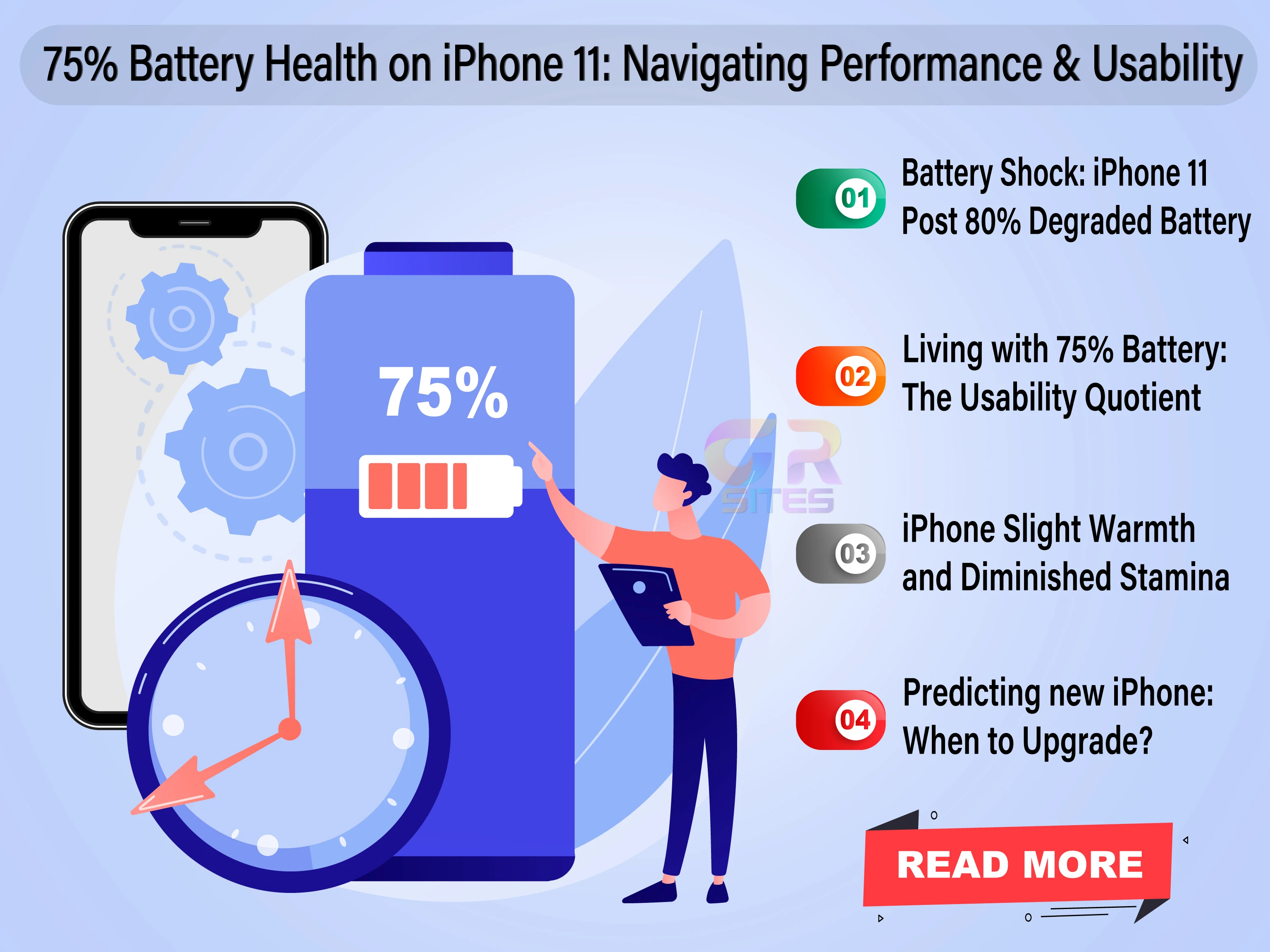
Living with iPhone 11: Battery Drop Below 80% After 3 Years

Imagine this: You've been a faithful owner of the iPhone 11 for three years, meticulously following all the tips and tricks to maintain your device's battery life. However, despite your best efforts, you notice a significant drop in battery health, causing some concern and raising questions about the longevity of your beloved gadget. In this blog post, we delve into the perplexing world of iPhone 11 post 80% degraded battery, exploring what it means for your device's performance.

Battery Shock: Maintaining Optimal Charging Practices
  • Unmasking the Drop: From 100% to 75% - After three years of faithful service, I found myself a disconcerting reality— battery health has plummeted below 80%. Despite my adherence to optimal charging practices, the noticeable change in the iPhone's behavior is impossible to ignore. 
  • Optimal Charging Practices: Myth or Reality? One of the first lessons we're taught in the smartphone realm is the importance of optimal charging practices. I religiously avoided overcharging, never let my battery drop to zero, and abstained from using third-party chargers. Yet, despite my devotion to these practices, my iPhone 11's battery health decided to take an unexpected nosedive.
Living with iPhone 11: Battery Drop Below 80% After 3 Years
Living with 75%: The Usability Quotient
While the numbers may seem alarming, living with a 75% battery health iPhone isn't as dire as it sounds. My iPhone continues to soldier on, displaying a predictable battery life that, albeit reduced, remains within the realms of usability. 
  • Slight Warmth and Diminished Stamina - As my iPhone 11 crossed the 80% battery health threshold, I noticed a palpable increase in its temperature. It was as if my trusty companion was running a fever. Alongside the heat, the battery life took a hit, shrinking by a notable 25%. The device remained usable, but the change was unmistakable. If my iPhone originally lasted a solid 6 hours on a full charge, it now struggled to make it through 4.5 hours.
  • Predicting the End: When to Upgrade? For me, the decision to upgrade my iPhone hinges on more than just a percentage on the battery health indicator. I wait for the day when the battery life becomes unpredictable, applications fail to respond promptly, and the phone starts to falter in day-to-day activities. It's not just about a number; it's about the user experience.
Conclusion: Navigating the iPhone 11 Battery Landscape
As I navigate the jumble of iPhone battery health, one thing becomes clear—it's a journey full of twists and turns. Despite my best efforts, the enigma of battery degradation persists. So, the next time your iPhone's battery health drops below 80%, remember, it's not just a statistic. It's a story of resilience, adaptation, and the evolving relationship between you and your trusty companion.In the end, the decision to upgrade is not solely dictated by a diminishing battery health number but by the overall performance of the device and user experience. Until then, I will continue my quest for the perfect balance between optimal charging practices and the unpredictable dance of battery life.
Monday, July 31, 2023

Type-C Compatible Drives: Embracing the Future of Connectivity

In recent years, technology has witnessed a remarkable revolution with the widespread adoption of Type-C ports across all computing categories. From laptops and desktops to mobile devices, Type-C has become the go-to interface for connecting peripherals and accessories. With this rapid shift towards Type-C, shoppers are faced with a critical decision - whether to invest in legacy USB drives or embrace the benefits of Type-C compatible drives. In this blog post, we explore the reasons why opting for Type-C compatible drives is the best choice, considering fast transfer speeds, universal support, and future-proof storage requirements.

Surge in Type-C Adoption
  • From Laptops to Smartphones: The Ubiquity of Type-C - Type-C ports are no longer exclusive to premium devices; they have permeated every aspect of the tech market. Whether you own a high-end laptop, a mid-range smartphone, or even a budget-friendly tablet, chances are it features a Type-C port. This widespread adoption has paved the way for a new era of seamless connectivity.
  • Convenience of Reversible Design - One of the most appealing aspects of Type-C is its reversible design. Unlike traditional USB connectors, which require trial and error for correct insertion, Type-C plugs can be inserted in either orientation. This feature has not only reduced the frustration of plugging in devices but has also enhanced user experience significantly.

Advantages of Type-C Compatible Drives

  • Lightning-Fast Transfer Speeds: Type-C compatible drives offer lightning-fast data transfer speeds, making them ideal for handling large files and media content. With USB 3.1 or 3.2 Gen 2 support, these drives can achieve data transfer rates of up to 10 Gbps or even higher, ensuring quick and efficient data management.  
  • Universal Compatibility: Gone are the days of carrying multiple cables and adapters for different devices. Type-C compatible drives offer universal support across various platforms, including laptops, tablets, smartphones, and more. This versatility eliminates the need for specific connectors, streamlining the user experience.
  • Future-Proof Storage: Investing in Type-C compatible drives is a forward-thinking decision. As technology continues to evolve, Type-C ports are expected to become even more prevalent, rendering legacy USB connections obsolete. By opting for Type-C compatible drives, users can future-proof their storage solutions, ensuring long-term usability and compatibility.

Making the Switch: Type-C for the Win

  • Dilemma of Legacy USB Drives: While some users may consider purchasing legacy USB drives due to existing devices, it is essential to assess the long-term advantages of Type-C compatibility. Investing in legacy USB drives may offer short-term convenience, but it could lead to compatibility issues and reduced data transfer speeds in the future.
  • Embracing the Benefits of Type-C: Type-C compatible drives offer a host of benefits that outweigh the convenience of legacy USB drives. From faster transfer speeds to universal support and future-proof storage, Type-C drives ensure seamless connectivity and optimal performance across devices.
  • Transitioning to a Type-C World: As technology evolves, the transition to a Type-C world is inevitable. Embracing Type-C compatible drives aligns with the industry's direction and prepares users for the advancements in data management and connectivity.
Conclusion

In conclusion, the rise of Type-C ports has transformed the tech landscape, presenting users with a more efficient and versatile connectivity solution. The adoption of Type-C compatible drives brings forth a myriad of advantages, including lightning-fast transfer speeds, universal support, and future-proof storage capabilities. By making the switch to Type-C, users can embrace the seamless connectivity of the future and enjoy enhanced data management across all computing categories.

Friday, June 9, 2023

Strategic Shift in Apple's iPhone Release Cycle

Strategic Shift in Apple's iPhone Release Cycle
Apple, known for its innovative products and cutting-edge technology, has always launched iPhone during the September launch event. However, as each year passes, the opportunity to introduce groundbreaking advancements in every new iPhone iteration is becoming more challenging. To address this, Apple soon might contemplate a strategic shift in its release cycle approach similar Mac models, with the possibility of extending the time between iPhone launches from 12 months to 18 or 24 months. This move aims to maximize product shelf life, increase sales revenue, and meet and exceed customer expectations.

The Limitations of Annual Release Cycles
  • Diminishing Technological Advancements: As technology progresses at an exponential rate, the challenge of introducing significant advancements with each annual iPhone release becomes increasingly daunting and launching products or software without bugs has become even more complex. The pressure to push boundaries and deliver new features becomes more difficult to sustain year after year. By extending the release cycle, Apple can allocate more time for research, development, and innovation, resulting in more substantial and impactful improvements in their flagship product.
  • Increased Production Cost: Launching a new iPhone model every year comes with its fair share of production costs. From sourcing raw materials to manufacturing and assembly, the expenses add up significantly. By elongating the release cycle, Apple can reduce operational costs, optimize its supply chain, and streamline production processes. This can ultimately lead to cost savings and increased profitability.
  • Short Shelf Life: With annual releases, the shelf life of each iPhone model is relatively short-lived. Customers who invest in the latest iPhone may find themselves tempted by the next iteration released just a few months later. Also, the new buyers are more interested in buying the older version of iPhones with discounted prices and offers. By extending the release cycle, Apple can offer a more prolonged period of exclusivity to customers who have recently purchased an iPhone, enhancing their overall satisfaction and loyalty to the brand.

Apples intention of Extended-Release Cycles

  • Extended Shelf Life: Extending the release cycle inherently extends the shelf life of each iPhone model. This provides customers with a more prolonged period to enjoy the pride of using latest version without feeling the peer pressure to upgrade to the latest version. Additionally, it allows Apple to continue supporting and releasing software updates for an extended duration, enhancing the user experience and ensuring compatibility with new technologies and services.
  • Marketing and Hype Generation: Longer release cycles can generate increased anticipation and excitement among consumers. With more time between each launch, Apple can strategically build hype and engage in targeted marketing campaigns. This approach creates a sense of exclusivity and rarity, driving demand and ultimately increasing sales upon each new iPhone release.


Meeting and Exceeding Customer Expectations:

  • Comprehensive User Feedback Analysis: By extending the release cycle, Apple can gather more user feedback from each iPhone iteration. This invaluable information can be used to identify areas for improvement and tailor future product developments to better meet customer expectations. Taking the time to listen and adapt to customer needs is a key factor in building long-lasting brand loyalty.
  • Addressing Technological Pain Points: A longer release cycle allows Apple to focus on addressing technological pain points identified by users and critics. By dedicating more time to research and development, Apple can implement solutions and enhancements that directly address customer concerns. This iterative approach ensures that each new iPhone iteration brings meaningful improvements and resonates with users on a deeper level.  
  • Continuous Innovation and Differentiation: With extended-release cycles, Apple has the opportunity to explore new horizons and disrupt the market with groundbreaking innovations. By investing more time in research, development, and design, Apple can create differentiating factors that set their products apart from competitors. This strategic approach fosters a culture of continuous innovation, ensuring that each new iPhone release is met with enthusiasm and anticipation.

Final thoughts: 

 In the rapidly evolving landscape of smartphone technology, Apple might soon start exploring the possibility of extending the release cycle for future iPhone models. By adopting a longer time-frame between each iteration, Apple can overcome the limitations of annual releases, increase product shelf life, and better meet customer expectations.